

Why Rolling Products Deserve Their Own Buying Strategy
Rolling papers, blunt wraps, and pre-rolled cones sit in the same general aisle of a smoke shop, but they behave like three different product categories once you look at cost structure, customer type, and shelf velocity. Lumping them together in a single buying decision, ordering whatever mix a supplier suggests by default, tends to leave retailers either overstocked on one format or chronically out of another. Treating rolling products as a deliberate, three-part category is one of the simpler ways a smoke shop or dispensary-adjacent retailer can improve both counter-space efficiency and gross margin.
Each format also draws a different customer. Papers skew toward traditional, price-conscious, and often younger or budget-focused buyers rolling their own from loose flower. Blunt wraps draw a customer who wants a specific flavor or wrap experience and is often willing to pay more per unit for it. Cones appeal to convenience-first buyers, including those newer to rolling their own or simply short on time. Understanding those differences is the foundation for allocating shelf space intelligently rather than evenly.
This comparison matters most at the buying stage because it is where retailers make decisions that are hardest to reverse quickly. Shelf planograms, counter displays, and standing wholesale orders all get built around assumptions about which category deserves the most space and capital. Getting that starting allocation wrong is not catastrophic, but it does mean weeks or months of suboptimal turnover before the data forces a correction.
Wholesale buyers also tend to overlook how these three categories interact with adjacent accessory sales. A well-merchandised rolling products section naturally drives attachment sales in grinders, lighters, rolling trays, and storage, since a customer buying rolling supplies is, almost by definition, already in a buying mindset for the broader ritual around them. Getting the core rolling category right has ripple effects across several other parts of the store's margin, not just the rolling products shelf itself.
Rolling Papers: Low Cost, High Frequency, Thin Unit Margin
Rolling papers are typically the lowest wholesale cost per unit of the three categories, especially standard packs of classic sizes from established brands. That low cost is exactly what makes papers a high-frequency, high-volume item. Retail price points on papers are modest, so the dollar markup per pack is small in absolute terms, but the category more than makes up for it in repeat purchase frequency. A regular paper customer restocks often, sometimes weekly, which means the category can generate strong turnover even though the margin per unit looks unremarkable on paper.
Papers also function as a traffic driver. Many customers who come in specifically for papers end up browsing other categories once they are in the store, which makes papers a useful anchor product near the front counter rather than a pure profit center. Premium and specialty papers, such as flavored, organic, or slow-burn varieties, carry a higher wholesale cost but also support a proportionally higher retail price, giving buyers room to build a tiered papers assortment, some economy SKUs for volume and a few premium SKUs for margin.
From a stocking standpoint, papers reward width over depth. Carrying a handful of well-known brands across a few sizes and paper types tends to outperform carrying a single brand in deep quantity, because paper preference is highly personal and brand-loyal among regular users.
Because unit economics are thin, papers are also where operational efficiency matters most. Bulk-buying proven, fast-moving paper SKUs to hit better wholesale pricing tiers has an outsized effect on category profitability compared to the same percentage discount applied to a slower-moving glass item, simply because of how many units move through the category. Retailers who negotiate hardest on their top two or three paper SKUs, rather than spreading negotiating effort evenly across the whole papers assortment, tend to see the biggest margin improvement for the least effort.
Blunt Wraps: Higher Unit Margin, Slower and More Flavor-Dependent Turnover
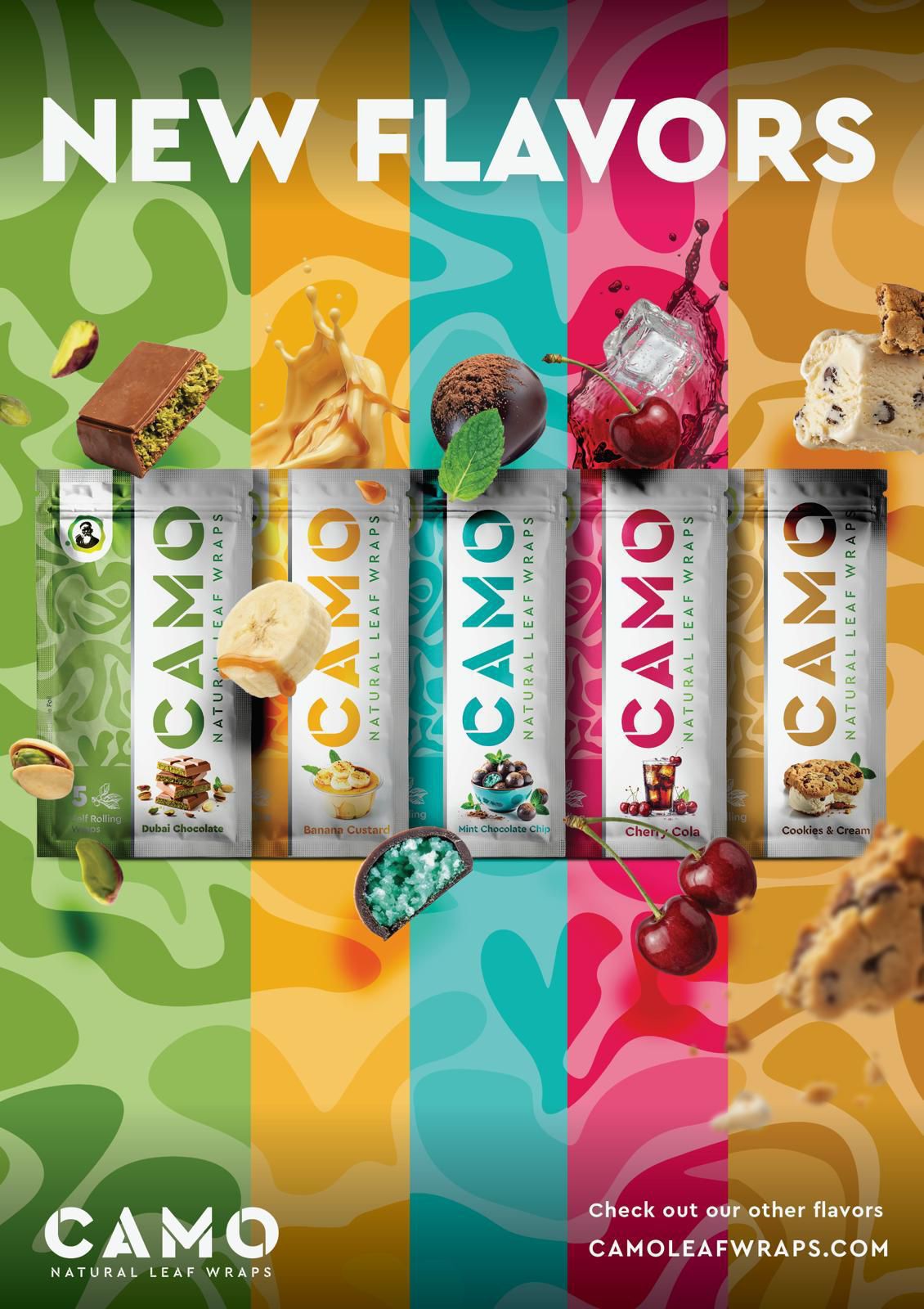
Blunt wraps generally carry a higher wholesale cost per unit than standard papers, and retail pricing follows suit, which typically supports a stronger dollar markup per unit sold. That higher per-unit margin is the category's main appeal for retailers. The tradeoff is that wraps turn over less predictably than papers. Flavor and brand preference drive purchasing decisions heavily in this category, so a wrap assortment that does not match local taste can sit on the shelf considerably longer than a comparable paper SKU would.
Because flavor trends shift and vary significantly by region and customer base, blunt wraps are more of a curated category than a volume category. Retailers generally do better stocking a moderate number of proven, popular flavors in modest quantities rather than the full flavor lineup a supplier offers. Watching which flavors move first in the initial weeks of carrying the category, and reordering only those, is a more capital-efficient approach than trying to stock the entire catalog up front.
Packaging format matters too. Single wraps at the counter support impulse buys, while multi-packs support the regular customer buying ahead. A mix of both formats, rather than committing entirely to one, tends to capture both purchase behaviors without overcommitting shelf space to either.
Freshness is also a bigger operational factor for wraps than for papers or cones, since wraps can dry out or lose quality if they sit too long, particularly in lower-turnover stores. That makes wraps a category where ordering conservatively and reordering frequently in small batches often outperforms placing one large order meant to last several months. A retailer who treats wraps like a perishable-adjacent category, rather than a shelf-stable one, generally sees fewer markdowns and less waste.
Pre-Rolled Cones: Convenience Pricing and Fast, Predictable Turnover
Pre-rolled cones occupy a middle-to-upper wholesale cost position, generally above standard papers and often comparable to or above wraps depending on size and pack count, but they are sold on convenience rather than raw cost. Customers buying cones are typically paying for the time saved rolling their own, and that convenience premium tends to support solid retail margins relative to wholesale cost. Because cones appeal broadly, to experienced users who simply want speed and to newer users intimidated by rolling their own, they tend to have more consistent, less flavor-dependent turnover than blunt wraps.
Cones also scale well across pack sizes, from small single-use packs at the counter to bulk box counts for higher-frequency buyers, which lets a retailer serve both impulse shoppers and stock-up shoppers from the same core product line. This flexibility, combined with more predictable demand than flavor-driven wraps, makes cones a strong candidate for a dedicated, well-stocked shelf section rather than a rotating, trend-chasing assortment.
The category has also grown steadily as a share of rolling-product sales industry-wide, driven largely by the same convenience factor that drives pre-packaged goods generally. Retailers who have historically under-stocked cones relative to papers and wraps are often leaving turnover on the table, particularly with walk-in customers who are not committed rollers and default to whatever is easiest to grab.
Cones also pair naturally with cross-sell items like grinders and rolling machines marketed for cone filling, which gives retailers an opportunity to build small bundle displays that lift average ticket size. Because cone buyers are already paying for convenience, they tend to be receptive to a modest additional purchase that reinforces that same convenience, such as a cone-filling tool or a storage tube.
Allocating Shelf and Counter Space Across the Three Categories
A practical way to think about space allocation is to match shelf share to the role each category plays rather than splitting space evenly. Papers earn front-counter, high-visibility placement because they are impulse and habit purchases with the highest purchase frequency; a small footprint moving a lot of units justifies prime real estate. Cones deserve a dedicated, well-labeled section with a range of pack sizes, since their predictable, broad-appeal turnover rewards consistent facing and makes them easy for customers to find without staff assistance. Blunt wraps work best in a curated, rotating section sized to your actual sell-through data rather than the full range a supplier offers, since over-facing an underperforming flavor wastes space that could go to a proven mover.
A reasonable starting allocation for a general smoke shop is to weight roughly 40 percent of rolling-product shelf space to papers, 35 percent to cones, and 25 percent to wraps, then adjust after 60 to 90 days based on actual sell-through by SKU. Stores with a younger, budget-driven customer base may want to weight further toward papers, while stores near college campuses or with a flavor-driven demographic often see wraps and flavored cones outperform that baseline.
Whatever the starting split, the key discipline is reviewing sell-through by SKU on a regular cadence, not just by category. A single wrap flavor or paper size can dramatically outperform its category average, and that kind of granular data is what turns a rough shelf allocation into a genuinely optimized one over time.
It is also worth revisiting shelf allocation seasonally rather than treating your initial planogram as permanent. Convenience-driven categories like cones tend to hold steady demand year-round, while flavor-driven wraps can see sharper seasonal swings tied to trend cycles. Building a habit of a quarterly shelf review across all three rolling-product categories keeps the allocation aligned with actual customer behavior rather than the assumptions you started with.
Signage and shelf talkers also play a bigger role in this category than many retailers assume, particularly for cones and wraps where customers may be unfamiliar with pack sizes, count, or how a specific flavor compares to familiar options. Simple, clear signage that groups products by use case, everyday papers, premium or flavored options, and grab-and-go cones, reduces decision friction at the shelf and tends to lift conversion more than rearranging the same products without any wayfinding cues.
Building a Smarter Rolling Products Order
Papers, wraps, and cones are not interchangeable categories, and treating them that way in wholesale ordering leaves margin and shelf space on the table. Papers reward volume and brand breadth, wraps reward tight flavor curation, and cones reward consistent, well-stocked convenience. Balancing wholesale cost, retail markup potential, and turnover speed across all three, rather than defaulting to a generic assortment, is how experienced retail buyers get the most out of a limited shelf footprint. Explore BDD Wholesale's full lineup of rolling papers, blunt wraps, and pre-rolled cones at bddwholesale.com to build a rolling products assortment matched to your store's customer base.


Leave a comment
This site is protected by hCaptcha and the hCaptcha Privacy Policy and Terms of Service apply.