
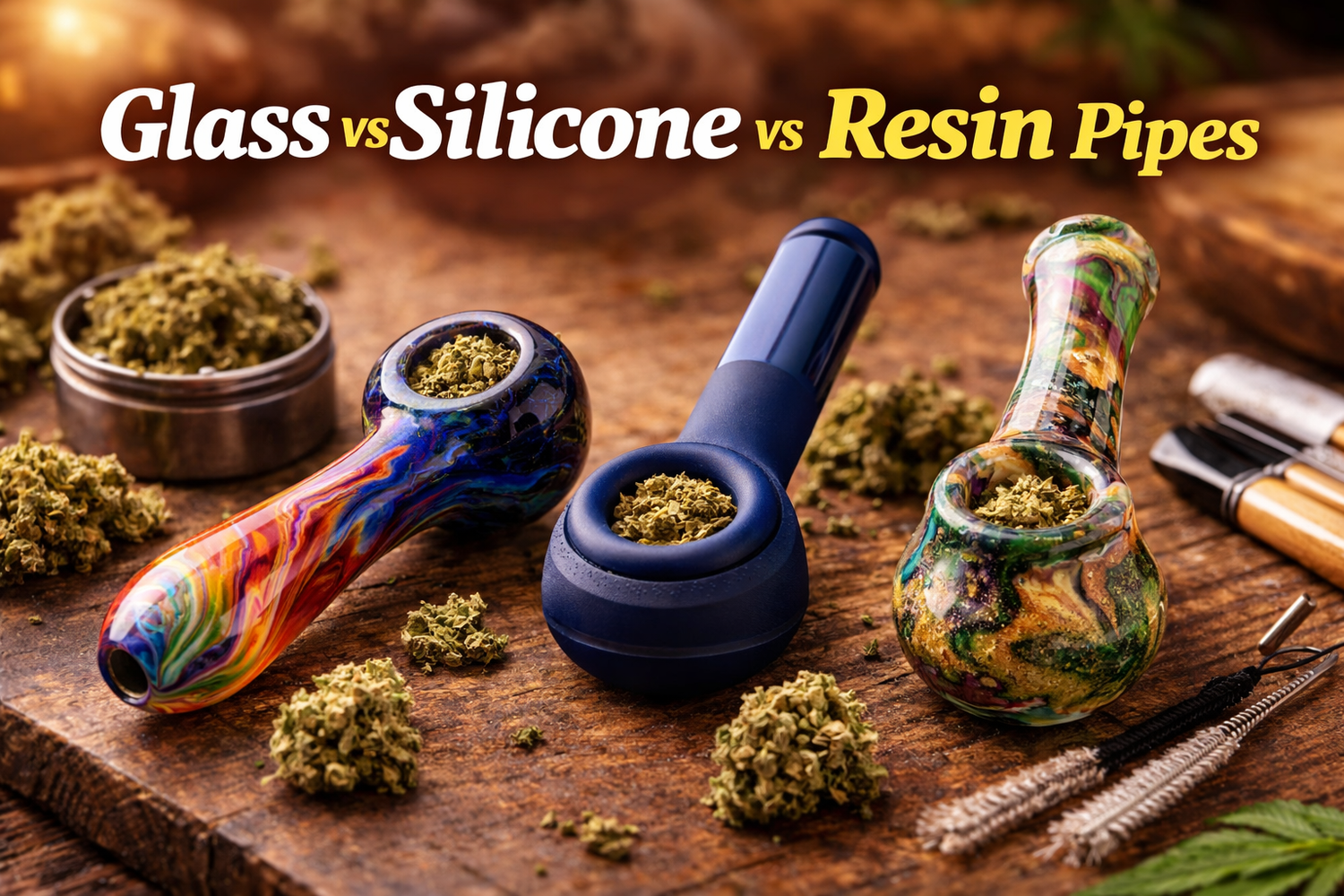
Glass vs. Silicone vs. Resin: Which Pipes Are Selling Best in 2026?
Choosing the right pipe material is one of the easiest ways to improve a smoke shop's assortment without adding major cost or complexity. At a glance, a pipe is just a pipe. In practice, material changes almost everything that matters at retail: how the piece looks on the shelf, how much breakage risk a buyer takes on, how quickly a customer understands the value, and whether the item feels like a premium pickup, a daily driver, or a fast impulse buy.
That is why the comparison between a glass vs silicone pipe, or a resin pipe vs glass, matters so much at wholesale level. A buyer is not only choosing how a product smokes. They are choosing how it merchandises, who it appeals to, and what job it does inside the store. Glass can create the strongest display impact. Silicone can reduce fear of breakage and help close practical buyers. Resin can move quickly when color, novelty, and price accessibility matter most.
BDD Wholesale's pipe category is built around this kind of variety. Our collection covers glass, wood, resin, and silicone, with more than 200 products and most models priced under $10 wholesale. That makes pipe material comparison especially useful for retail buyers trying to balance affordability, durability, and shelf appeal. For most stores, the real answer is not choosing one material only. It is building the right mix.
Why Pipe Material Matters for Smoke Shop Sales
Material is one of the first signals a customer reads, even if they do not say it out loud. Glass usually signals craft, clarity, and a more premium feel. Silicone signals durability, convenience, and lower stress. Resin signals personality, color, and a novelty-first purchase. Those impressions influence whether a customer sees the item as a display piece, a backup pipe, a gift, or a quick add-on.
For the store, material also affects how inventory behaves. Glass can create stronger visual merchandising moments, but it carries more fragility risk. Silicone supports the durable smoking pipe conversation and gives staff an easy recommendation for shoppers who are rough on their gear. Resin can be one of the strongest categories for low-friction, colorful impulse movement, especially when the store leans into novelty and themed accessories.
Repeat purchase behavior is shaped by material too. A customer who buys glass may be buying for style, upgrading from something basic, or replacing a broken piece with something more attractive. A customer who buys silicone is often looking for utility, travel-readiness, or an unbreakable pipe alternative. A customer who buys resin may be responding to design first and practical use second. None of those patterns are universal, but they are useful when planning a retail assortment.
This is why pipe material comparison should not be treated as a technical footnote. It is a merchandising decision. The material changes how you price the item, how you present it, and what role it plays in the store.
Glass Pipes: Best for Visual Appeal and Upsell
Glass remains one of the most important materials in wholesale smoking pipes because it does something other materials rarely do at the same level: it makes the display look better. Glass catches light, shows color clearly, and signals craftsmanship in a way that customers immediately understand. Even a simple hand pipe can feel more premium when it is glass, and a stronger visual category often makes the whole pipe section look more established.
BDD leans into this advantage in its broader pipes positioning, describing the collection as including artistic pieces with impressive design. Individual glass listings reinforce that perception by emphasizing colorwork, shape, thickness, and visual character. That matters for retail because glass is often the category that gives a shop personality. It is the part of the pipe wall that customers stop to browse, compare, and talk about.
Glass also supports upsell better than most low-ticket pipe materials. A customer may come in looking for something affordable, then move up to a more decorative or better-finished glass piece because it feels special. That does not mean every glass pipe needs to be expensive. BDD's collection copy stresses that most models across the pipe range are under $10 wholesale, which makes glass especially useful because it can still feel premium without demanding a premium buy-in on every SKU.
From a merchandising perspective, glass works best in featured shelves, front-facing cases, and any area where design can do the selling. It is also the most useful material when you want to create category hierarchy. A store with a strong glass offering usually looks more complete than one that relies only on utilitarian materials.
The tradeoff is obvious: glass is not the best material for every shopper. It carries more breakage concern, and some customers want something that feels less fragile. That is why glass tends to perform best when the store uses it for display appeal, gifting, collector energy, and step-up purchases rather than trying to make it the only answer for everyone.
Silicone Pipes: The Durable, Beginner-Friendly Option
If glass wins on visual impact, silicone usually wins on practical confidence. A silicone vs glass pipe decision is often a choice between beauty and peace of mind. Silicone gives buyers a material story that is easy to explain in seconds: more durable, less stressful to own, and a comfortable recommendation for someone who does not want to worry about dropping a piece.
BDD's pipe collection positions its products around durable materials and notes that buyers can choose silicone alongside glass and resin. Product-level silicone pages push that angle further by emphasizing durability, portability, and strong everyday use. For a retailer, that creates one of the easiest sales conversations in the category. When a customer says they want something tougher, something for travel, or something that feels beginner-friendly, silicone hand pipe wholesale options become the natural answer.
This is where silicone becomes especially strong in smoke shops serving first-time buyers, budget-conscious repeat shoppers, and customers who want a daily driver rather than a display piece. Silicone can feel less intimidating than glass. It removes the fear that one small mistake will break the product. That makes it highly useful for recommendation selling.
Silicone also helps stores cover a different need state. Not every customer wants artistry. Some want convenience. Some want durability. Some want a pipe that can live in a bag, survive day-to-day movement, and still feel easy to use. Silicone covers that part of the category better than glass does.
The display tradeoff is that silicone does not usually deliver the same premium visual effect as glass. It can still look fun or bold, especially in themed designs, but it rarely gives the same craft-forward impression. That is why silicone works best as a utility layer in the assortment. It does not replace glass. It supports the category by solving a different retail problem.
Resin Pipes: Colorful Impulse Sellers
Resin sits in a useful middle space for many shops. It does not try to compete with glass on craftsmanship language, and it does not lean as heavily on durability messaging as silicone. What it does extremely well is sell personality fast. Bright colors, novelty forms, themed designs, and approachable price points make resin pipes bulk-friendly and highly usable in impulse zones.
BDD's pipe collection places a strong emphasis on design variety and affordability, and resin fits that positioning naturally. Across smoke shops, resin often performs best when the customer falls in love with the look first. The item feels expressive, giftable, and easy to justify. It is the type of category that works well near checkout, in novelty walls, or inside curated themed sections where color and visual identity drive attention.
This makes resin especially valuable for stores that want quick-turn, low-friction add-ons. A resin pipe does not always need a long explanation. The design does a lot of the work. That is why resin can outperform more serious-looking materials in fun-first environments.
Resin is also useful when a retailer wants assortment variety without turning the wall into a uniform grid of similar items. A few colorful resin SKUs can break up the category visually and make the whole section feel more alive. In many stores, that matters more than buyers think. Pipe sales are not only functional. They are emotional and aesthetic too.
The limitation is that resin usually does not own the premium end of the shelf the way glass can, and it does not dominate the durability conversation the way silicone can. Its strength is speed, novelty, and display energy. In the right store, that can make it one of the best sellers per inch of display space.
Wholesale Pricing and Margin Comparison by Material
For most buyers, material choice is really a margin-and-turn decision disguised as a product question. BDD states that most items in its smoking pipes wholesale collection cost under $10, which creates room for multiple pricing strategies across the category. The opportunity is not just buying low. It is choosing materials that support the right combination of perceived value, turnover, and low operational friction.
Glass can justify stronger perceived value because shoppers often connect it with artistry and craftsmanship. That gives stores room to build visual upsell moments, especially with pieces that look more decorative or refined. The downside is that fragility risk can affect handling, display strategy, and replacement patterns.
Silicone often performs well when the value story is durability. Even if the wholesale cost is modest, customers can justify the purchase through practicality. That makes silicone especially strong for stores that want dependable everyday sellers with low explanation burden.
Resin often works best in accessible novelty territory. The design does the selling, the price point usually feels approachable, and the category supports impulse movement well. The tradeoff is that resin rarely carries the same premium feel as standout glass.
|
Material |
Best retail strength |
Best use in store |
|
Glass |
Visual appeal and upsell |
Featured shelves and display cases |
|
Silicone |
Durability and beginner value |
Utility section and travel-friendly picks |
|
Resin |
Novelty and impulse appeal |
Checkout, novelty walls, themed displays |
A smart buyer looks at all four factors together: how fast the item can turn, how much value the customer sees in it, how easy it is to merchandise, and how much risk it creates in handling. That is a better lens than asking which material is best in isolation.
What Sells Best by Store Type
New smoke shop
A new shop usually needs balance. It cannot afford a wall full of fragile-looking pieces, but it also cannot afford a category that looks dull. That is why a mixed-material pipe assortment tends to outperform a single-material strategy.
Established smoke shop
An established shop can usually go deeper in glass because returning customers often respond to design variety and upgrade potential. Silicone and resin still matter, but they work as supporting categories rather than the whole identity.
Convenience-store accessory section
In a tighter retail environment, silicone and low-friction resin usually make more sense than a heavily glass-led assortment. The products need to be easy to understand, easy to display, and easy to justify quickly.
Display-heavy novelty shop
A novelty-driven store can get strong results from resin and themed glass together. Resin drives impulse energy. Glass keeps the section visually elevated. Silicone remains useful as the practical option for customers who want something tougher.
Best Pipe Material Mix for New Smoke Shops
For a new shop, the most practical starting mix is role-based rather than equal. Glass should usually be the visual backbone of the category because it gives the assortment shape, quality perception, and stronger shelf appeal. Silicone should form the durability and utility layer, giving staff an easy everyday recommendation. Resin should cover the novelty and impulse layer, helping the section feel colorful and active.
In practice, that means stocking enough glass to make the wall attractive, enough silicone to answer the durability question confidently, and enough resin to keep the assortment fun and affordable. A new smoke shop does not need every material in equal proportion. It needs each material present in the right role.
That mix also makes staff selling easier. One material for display and upsell. One for durability. One for novelty. Customers understand those distinctions quickly, and the category becomes easier to navigate.
Final Verdict: Which Pipe Material Wins?
If the question is which material looks best on the shelf, glass usually wins. If the question is which material feels safest and easiest to recommend for practical use, silicone wins. If the question is which material supports colorful impulse selling, resin wins.
But if the real question is what sells best in smoke shops, the strongest answer is not one material. It is a balanced wholesale mix built around different retail jobs. Glass brings display value and upgrade energy. Silicone brings durability and beginner confidence. Resin brings novelty and quick conversion.
That is the smarter way to build a category in 2026. Instead of asking which one replaces the others, treat each material as a different merchandising tool. Stores that do that usually build a better-looking wall, support more buyer types, and create a stronger overall accessories mix.
Browse all wholesale pipe materials at BDD Wholesale and build a more balanced pipe assortment around glass, silicone, and resin.
FAQs
Are silicone pipes better than glass pipes?
Not in every way. Silicone is usually better for durability and low-stress everyday use, while glass is usually better for visual appeal, craftsmanship perception, and upsell.
Do resin pipes sell well in smoke shops?
Yes, especially in novelty-heavy environments. Resin often works well as an impulse-friendly, color-driven category that adds personality to the display.
Which pipe material breaks the least?
Silicone is typically the strongest choice when break resistance is the priority. It is often recommended to shoppers who want an unbreakable pipe alternative.
What is the best pipe material for a new smoke shop?
A mixed assortment usually works best. Glass should handle visual appeal, silicone should cover durability, and resin should support novelty and impulse purchases.
Are glass pipes still the best sellers?
Glass is still one of the most important materials because it drives display quality and premium perception, but it does not solve every retail need on its own.
What wholesale pipe materials should I stock first?
Start with a balanced mix of glass, silicone, and resin. The best assortment is usually the one that gives customers three clear choices: attractive, durable, and novelty-driven.


Leave a comment
This site is protected by hCaptcha and the hCaptcha Privacy Policy and Terms of Service apply.